
ICMC Achive에서 자료를 받아보세요~
ICMC는 대표적이며 권위있는 국제 전자음악 컨퍼런스 기관인데 일년에 한번씩 많은 작곡가/연구가/학생/학교들을 모아 전자음악의 발전에 기여하는 컨퍼런스/콘서트를 엽니다.
따라서 각종 전자음악 관련 페이퍼들이 새롭게 등장하고 이슈가 되기도 합니다.
아래 링크에서 자료들을 받아보세요.
http://quod.lib.umich.edu/i/icmc/browse.html
ICMC Achive에서 자료를 받아보세요~
ICMC는 대표적이며 권위있는 국제 전자음악 컨퍼런스 기관인데 일년에 한번씩 많은 작곡가/연구가/학생/학교들을 모아 전자음악의 발전에 기여하는 컨퍼런스/콘서트를 엽니다.
따라서 각종 전자음악 관련 페이퍼들이 새롭게 등장하고 이슈가 되기도 합니다.
아래 링크에서 자료들을 받아보세요.
http://quod.lib.umich.edu/i/icmc/browse.html
Oberlin에 음악원 학생들이 악기+전자음악을 연주하고 싶으니 작품을 보내고 싶은 사람은 보내달라는 작품콜입니다. 이점은 연주가 되고, 또 잘하면 악보가 Library에 출판될 수 있고, 공연 테입등을 보내줄 수 있다는 거구요. 관심있으신분은 아래 메일을 참고하세요.
Greetings all,
A call for electroacoustic works composed for instrument(s) plus electronics
Deadline: September 7 (earlier would be great, later works if necessary)
This fall, I’ll be teaching a class here at the Oberlin Conservatory focused on the interpretation of electroacoustic works composed for instrument(s) plus electronics. Students in the class will be Conservatory performers interested in adding such works to their repertoire, playing them on junior and senior recitals, etc. These are top-notch performers with terrific chops and incredible enthusiasm for new and experimental music, and I am very excited to work with them in this context. We will cover a variety of topics, ranging from the technical details of supporting electroacoustic works in concert to aesthetic considerations and creative approaches to this kind of performance.
While the TIMARA department and the Oberlin library already have performance materials for many wonderful pieces, I would greatly appreciate your help as I add to this collection. I am particularly interested in having very new works available to these students. These works could be for any instrument(s) and any form of electronics (tape, Max/MSP, other). Works for solo instruments will be particularly relevant, but small ensemble pieces will also be covered. The exact makeup of the class is not yet known, but I am confident that a variety of winds, strings, piano, percussion, and voice students will take part. Many of these students go on to successful performance careers after Oberlin, and it is my hope that the pieces they add to their repertoire during this class will stay with them and enjoy more performances in the future.
I will be happy to receive works directly (see information below). Or, if you prefer, I will do my best to have our Conservatory library order works that are published and readily available. For the purposes of the class, the most relevant pieces will have a score (non-traditional scores very welcome), electronics that are concert-ready (either as a tape part or patch that works well without the composer present), and some kind of recording of the piece.
Our semester begins September 7, so works received by then will be easiest to get in front of the performers. All works received will be made available to the performers. If your work is studied and/or performed, I will be happy to let you know and send the relevant programs and/or recordings.
Many thanks to all of you, and please let me know if you have questions.
Peter Swendsen
————
Works (or ordering information) can be sent directly to me via e-mail (reasonable file sizes, please), snail mail, or web links:
peter.swendsen@oberlin.edu
Peter Swendsen
77 West College St.
Oberlin, OH 44074
Baudline spectral visualizer는 원래 Linux만 지원했는데 Mac을 위한 버전이 출시되었네요.
가능한 Application은 다음과 같습니다.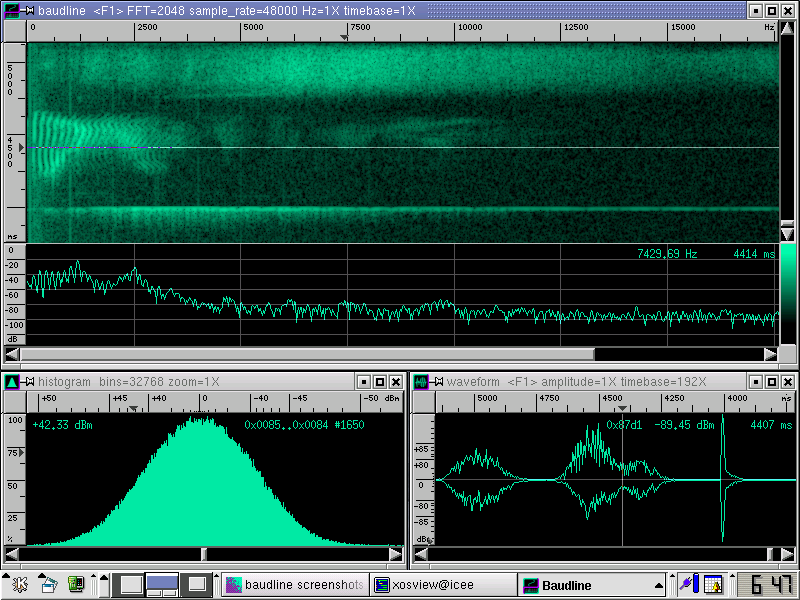
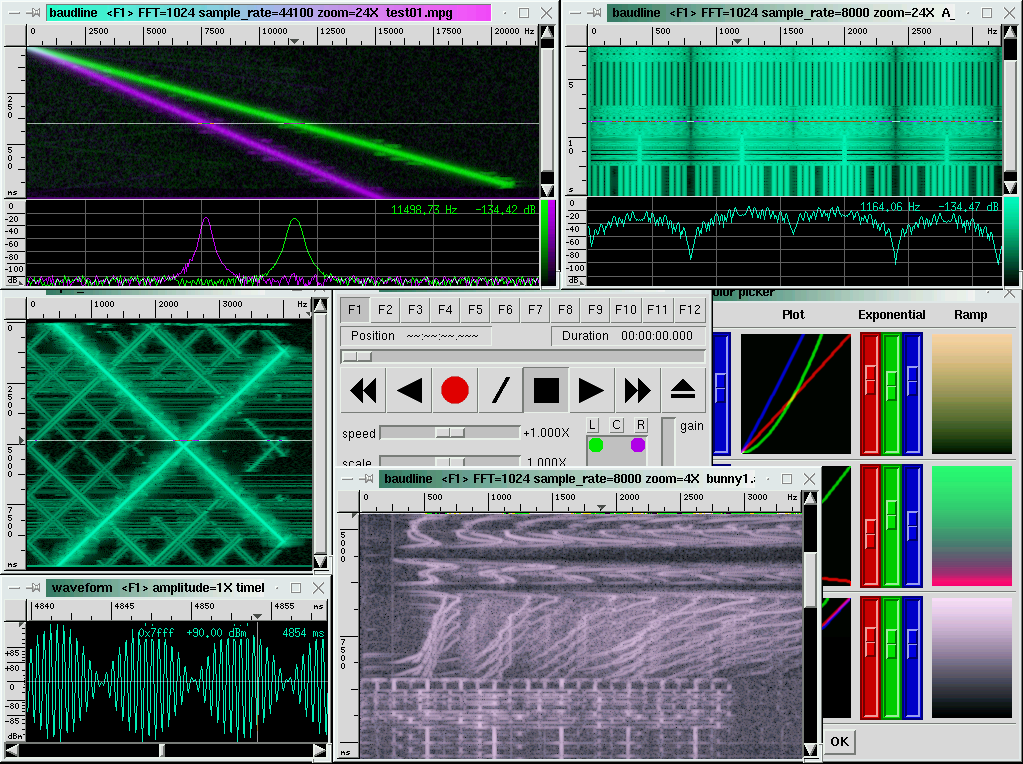 또한 기본적인 기능은 다음과 같습니다.

더 자세한 내용은 여기를 참조하세요