‘Buoyants’ in Grotekerk, Veere

헤이그에서 오랫동안 알고 지낸 친한 친구인 Ludmila RodriguesMike Rijnierse가 지난 6월 초 아주 반가운 전화를 해왔다. Zeeland, 내가 그때까지 한 번도 가보지 못했던 곳에 있는 아주 오래되고 흥미로운 교회에서 site-specific installation을 할 예정인데, 사운드를 맡아 달라는 것이었다. “아이고, 감사합니다!” 하고는 며칠 후 그들의 스튜디오에서 첫 미팅을 가졌다.

Veere라는 기차도 들어가지 않는 작은 마을에 자리한 Grotekerk(“큰 교회”라는 뜻으로, 네덜란드 도시마다 있는 대표 교회쯤으로 생각하면 된다)에서의 전시였다. Lud가 보여준 프린트물과 웹사이트 속 교회는 구조가 확 트여 있고 전시 공간으로도 운영되는 곳이었다. 실제로 박물관처럼 쓰이며 크고 작은 전시들이 열리고, 매년 Kerkmeester라는 프로젝트를 통해 예술가들이 커미션을 받아 전시를 하는데, 올해는 Lud와 Mike 차례였다. 그들이 말해 준 전시의 컨셉은 Underwater!

최근 예술계에는 환경과 인간 외 존재들에 관한 주제가 많다. 당대의 중요한 문제이기도 하고, 인간 중심의 사고에서 벗어나려는 흐름이기도 하다. 학생들도 종종 이런 주제를 다루니 낯설지는 않다. 그러나 내 흥미와는 거리가 있었던 이유는, 물속 환경을 이야기하려면 녹음을 해야 한다는 점 때문이었다. 나는 20년 가까이 전자음악에 몸담으며 단 한 번도 field recording을 해본 적이 없었다.

나는 왜 녹음에 흥미가 없었을까? 흥미로운 소리를 듣고 감동하거나 명상에 잠긴 적은 많지만, 그것을 작품으로 담는 방식은 내 작업 방향성과 달랐다. 다른 예술가들이 만든 field recording 기반의 작품을 듣는 것으로 충분하다고 생각해 왔다.

그런데 이번 프로젝트는 달랐다. “이제 안 해본 것을 해봐야 한다”는 강한 내적 목소리가 있었다. 이런 기회가 아니고서야 내가 뜨거운 햇볕이나 비바람 속에서 몇 시간을 마이크 들고 서 있을 리가 있겠는가.

실제로 최근 나는 다양한 변화를 시도했다. 2024–2025년에는 학교에서 Analog Studio 수업을 청강하며 완전히 새로운 방식으로 작품을 써 보기 시작했다. 물론 DIY 세계는 계속 확장 중이지만, 늦기 전에 새로운 것들을 경험해 보고 싶었다. 한 번으로 충분하다면 그걸로 족하지만, 그 과정이 내게 어떤 변화를 가져올지 모른다. 그래서 흔쾌히 “YES!”를 외치며 프로젝트에 돌입했다.

Grotekerk Veere
Some notes after the visit

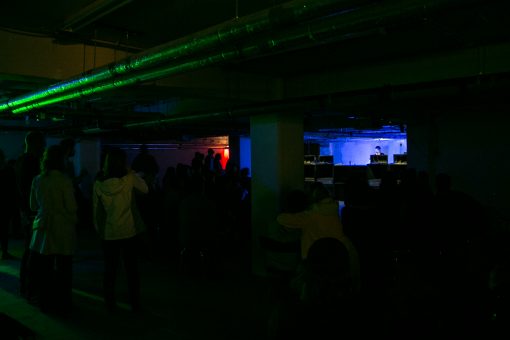
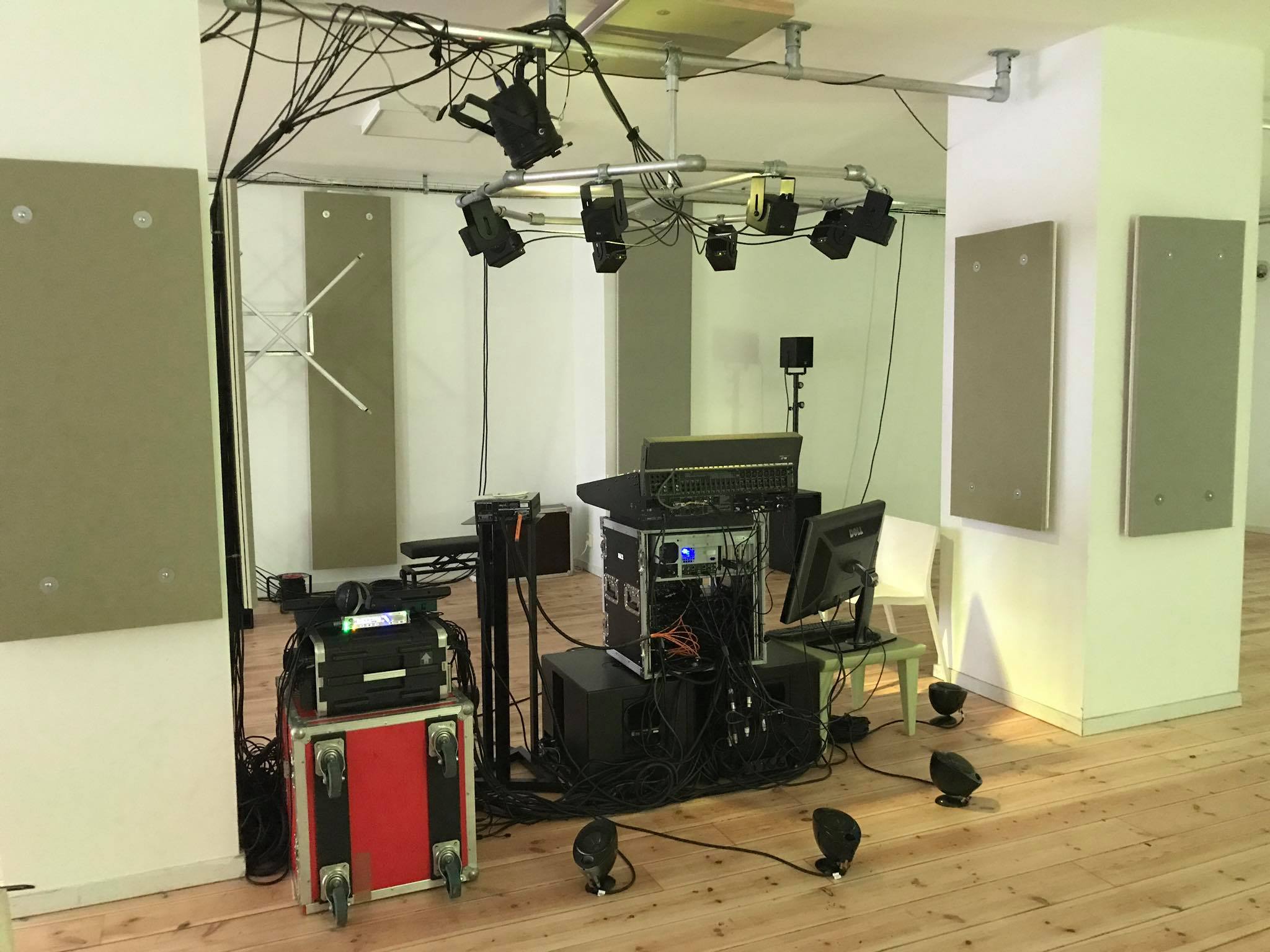
7월 초, 한국에 휴가 가기 전 나는 Lud와 Mike와 함께 Veere를 방문해 내 인생 첫 field recording을 했다. 교회 공간을 둘러보니 동기부여가 폭발했다. 가장 흥미로웠던 것은 천장이 아주 높다는 점이었다. 우리는 2층에도 스피커를 두었고, 10미터 높이에 8채널(4개의 스테레오 페어), 17미터에는 4개의 스피커를 천장을 향해 배치했다. 옥토포닉이라기보다는 확산(diffusion)에 가까운 구성이었다.

내 상상 속에서 청자들은 물속에 있고, 17미터 위의 스피커는 마치 지상을 상징하는 듯했다.

집에 돌아와서는 수도꼭지, 샤워 등으로 샘플을 만들었고, Open Data Archive에서 과학 목적으로 업로드된 underwater recording들을 다운받았다. 그런데 들으면서 깨달은 것은 우리가 상상하는 “물속 소리”는 사실 미디어가 주입한 이미지라는 점이었다. 실제 소리들은 전혀 다르게 들렸다. 자갈을 긁는 듯하거나 crackle noise generator 같은 노이즈와 어쿠스틱 사운드가 섞여 있었고, 가끔 마이크를 툭툭 치는 듯한 소리가 들어 있어 ‘아, 레코딩이구나’ 하고 느끼게 했다.

그래서 오히려 나는 억지로라도 ‘물’의 이미지를 덧입혀야겠다고 생각했다. 물속 소리와 물 밖의 소리가 함께 모였다.

또 다른 재료는 Analog Studio에서 녹음한 신호들이었다. 단순히 물속 소리를 재현하는 것만으로는 예술적 의미가 없다고 생각했다. 나는 오히려 듣는 이의 상상력을 열어주고 싶었다. 그래서 synthetic sound들을 더해, 미지의 세계를 미지로 남기고자 했다.

결국 5–10분짜리 작품을 15개나 만들었고, 여름 내내 한국에서 시원한 물소리를 들으며 헤드폰으로 작업했다.


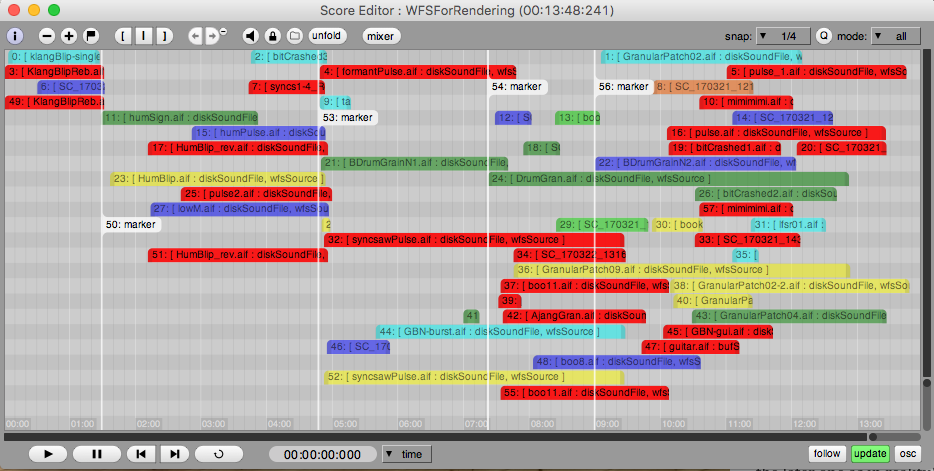
12채널 spatialization은 WFSCollider로 마무리했다. 레이어마다 다른 출력과 믹싱을 적용했고, 일부는 WFSCollider 패턴을 이용해 spatial motion과 sound modification이 일체화되도록 했다. 예컨대 granular한 처리를 하면서 density가 커지면 위치 이동의 편차(deviation)도 커지는 식이었다.

Field Recording

한국에서 돌아온 바로 다음날, 짐을 풀자마자 다시 Veere로 향했다. 시차 적응은 힘들었지만 주로 저녁에만 고생했고, 낮 동안은 mastering을 마무리했다. 걱정했던 17미터의 시간차도, 두 레이어가 뚜렷할 때와 모호할 때가 적절히 섞여 흥미로운 효과를 냈다. 그리고 후반에 추가된 bass shaker 덕분에, 귀를 바닥에 대면 천장에서 들려오는 소리가 바닥으로 전이되는 듯한 오묘한 효과도 느낄 수 있었다. 볼륨이 낮아도 청중이 온몸으로 소리를 느낄 수 있었다.

@Benjamin van der Spek Mike, Rob, Lud and I from the top left.
@Benjamin van der Spek

설치는 Lud, Mike이 함께 준비했다. 그 둘은 거대한 녹색 천에 핀과 줄을 설치하고 Rob이 만든 모터 인터랙션으로 파도를 만들어내는 장치(위의 이미지)였다. 단순해 보이지만 안정적인 대규모 움직임을 구현하기 위해 엄청난 노력이 필요했다. 셋다 정말 대단하다. (크레인 타고 17미터까지 올라가는 그런 작업은 나는 절대 못한다!)

음악은 약 두 시간 지속된다. 전시는 10월 26일까지 이어지고, 내년 봄 재오픈 예정이다. 많이 들 가서 보시길!
👉 grotekerkveere.nl

2018 in a Nutshell

I know that the year 2018 has already gone long ago… Still, better writing about some memorable musical activities from the year rather than not! And eventually it will make me to go further. It has been indeed quite a busy and productive year. I worked hard, and made lots of new music and performances, so here I’d like to share some of them.

1. ‘Identifying’ in sonADA, Aberdeen/UK //Feb

It’s not the first time to visit in Aberdeen. 4 years ago, Mei Yi (Percussionist) and I went there, performed several pieces of mine, invited by sonADA festival, which my dear friend and admired composer Suk-Jun Kim is organizing. This time I went alone, performed ‘Strings,’ ‘Singing Bowl,’ and ‘Two Bamboos,’ the most recent live sets. Although it was quite demanding to perform several sets at once, but I had a pleasant time! When you are performing at one festival second time, then you become a friend with it.

2. Rewire Festival 2018 //Apr

photo by Peter Balkema for 3voor12

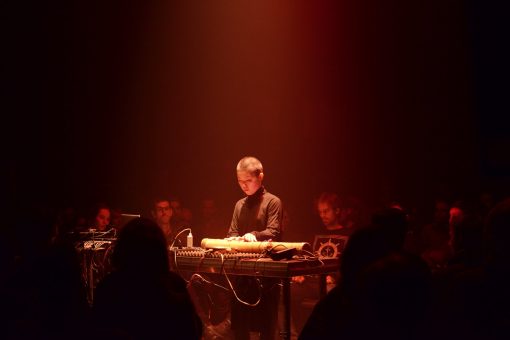
It’s always great when performing at the local music festival. Since I’ve been in Den Haag, I have never had a chance to perform at Rewire, one of the most popular music festivals in Europe, and this time I got the honer and was very thankful about it. I performed a newly developed set with Bamboo and Gong at Koorenhouse hall, the very heart of the center. It was great, especially you know that most of your local friends are in front of you!

3. ‘CHI’ vol.2 //Jun

Finally after so many years, the CHI volume 2 happened at Studio Loos, the dearest place. CHI Vol.1 happened in 2013, performing with Mei Yi and Sonolab, with a guest performer (Henry Vega at Vol1). This time, I composed two new pieces, ‘Rolling stones’ and ‘Drinking alone under the moon’ and performed a piece from Vol.1 ‘BamBoos,’ and another premiere of a piece for a Bass Drum, performed by Sonolab Duo. The guest performer was Yota Morimoto, another dear friend from my first year in NL. After very nervous stressing time passed, it was very relieving to perform all the pieces. I hope this series could continue.

4. TodaysArt Festival – Azimuth-x //Sep

photo by Mike Rijnierse

Normally Azimuth invites composers/performers to perform with their specific multichannel system, but this time was MONO! It was special as the concert was part of the TodaysArt Festival in Den Haag! I performed a newly developed set ‘Cross Wired’ :the main idea was to modulate a CV voltage with an analog amplifier with feedback signal. This chaotic signal was enough to manipulate with the signal processing. But still I needed some more materials to fill 30 minutes of performance. So I added some voice and processing at the intro, explaining what I am actually doing physically, but the audience can’t understand what I am talking about in time, as the sound is turning into a very noisy sound. It was really fun.

5. UTOPA Organ – Conlon & Orgelpark //Nov

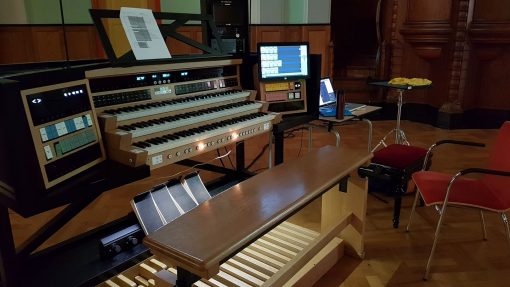
UTOPA Baroque organ is a special organ that one can control its keys/stops/registers via MIDI or OSC. This gigantic machine(?) was quite challenging as it can do a number of different things that normal Baroque organ can’t do, such as air control, making continuous pulses/staccato, controlling each register individually, etc. I thought it’d be a good idea to make the concept and the piece simple, so that I focused on the characteristics of the organ as a ‘Machine.’ Accordingly the title of the piece is ‘Machine Breathing .’
The project is commissioned by Orgelpark. We, the Conlon foundation, were participacing the project as a composer and also as an assistant for other composers.

6. Pentacle 15.3 – NEXT Festival, Bratislava //Nov

photo by Nina Mik

It was an exciting opportunity to perform in Bratislava, as it was the first time in Slovakia, and I could meet some old Sonology friends who are very active there. Above all, the commission is to perform a live electronic muisic for 15.3 channel Pentacle system! Commissioned by NEXT Festival and SonicActs Amsterdam, I could perform with it. Pentacle is developed in STEIM by Fedde ten Berge and Jesse Meijer. The spatialization works with audio signal using FFT bins. All the composers did a few days of residency in STEIM and the NEXT festival was the premiere. I renewed the live set with two Bamboos and a gong. I had a wonderful time there.

7. PRISM#1 – Live music for Live film projection by Lichun Tseng //Dec

decomposed landscapes @ sound//vision IFFR with Ji Youn Kang (excerpt) from lichun tseng on Vimeo.

Ever since I worked with Filmwerkplaats Rotterdam, I missed working with them. And dear Lichun Tseng, one of the filmmakers there offered me this chance to make a live sound for her live film projections with 16mm projectors. This time at Nantes, France, we performed 40 minutes of live set. We practiced only 2 days, due to the complexity of booking the location and her heavy loaded setup, so it made us nervous, but we made it well. We drove 9 hours to Nantes, was quite an adventure, but all were memorable.

I am again looking forward to this year’s activities! Hopefully another productive year!

Note on Azimuth #3 Concert : a new piece for 32 channels

Rough view of Azimuth #3 setup

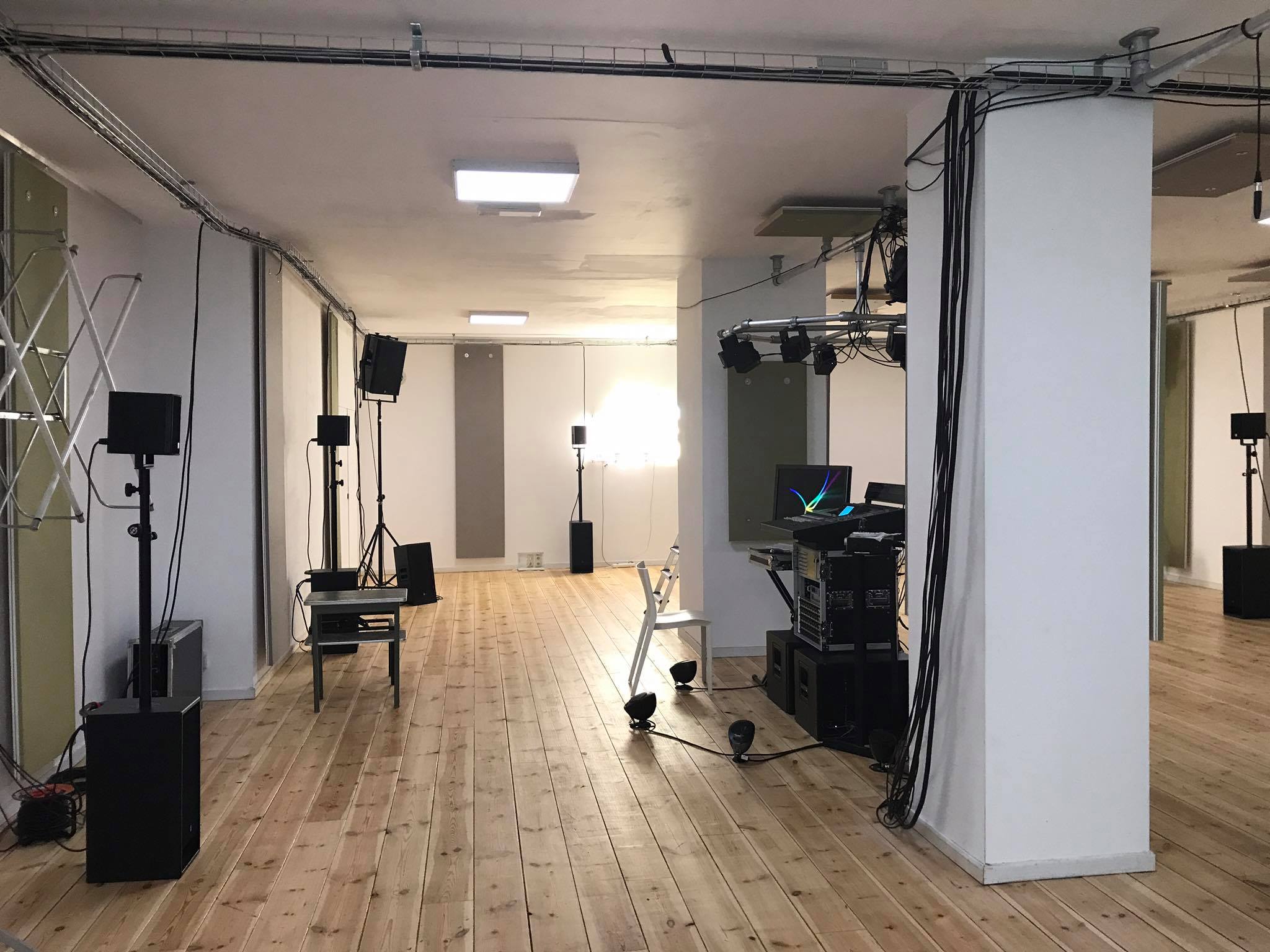
Few months ago, I was invited to present a piece for 32 channel system of Azimuth foundation. Azimuth foundation(http://www.azimuthfoundation.net) is an organization of musicians/composers that organize concerts with their multichannel system that its configuration varies every edition. This time, they offered 32 channels: 8 circle outside, 4 quadra up and down at the corners of the hall, 8 circular center up, and down.

Then I thought I must write a new piece for it, although I didn’t have so much time left at the moment. I didn’t want to re-arrange an old piece that is written for a different system as this specific configuration can offer a number of interesting ideas to make a sound journey.

As I have been writing a lot for the WFS system (192 loudspeakers), my brain worked automatically the way I used to when writing for the WFS, which… could be described like : considering the whole space as an opened one, and creating my own ‘drawings.’

It wasn’t too long to realize that I was wrong in my approach, as this system is quite a different one. It is more like a ‘interwoven’ space that is made with a mixed up of different system(quad+multiple octa, and even stereos), accordingly different capacities. I couldn’t say that it is for a diffusion, nor for a spatialization. Rather a mixture of those two, especially with the setup in the center, speakers directing toward the audience, from up to down.

The speakers in the center, 8 up and 8 down toward the audience

The idea had to follow up of the ideal of the speaker setup. Then my composition should have to make sense as well. Then I thought it will be a good idea to have two specific ‘motions’ work together: 1. Some sound sources that are alive, moving, and having strong identities. 2. Clouds that are diffuse and support those main actors.

Previously, actually long time ago, I wrote a series of pieces for the WFS system, called ‘Enfolding Plane(I and II).’ Those are the pieces that I composed in order to study fully what the WFS could do with a variety of different spatial figures, of course with different sound materials. I thought it might be a good idea to add another piece into the series this time, so that I put ‘Enfolding Plane III’ title and gave a subtitle into it, which was ‘Punky Pulse Pool.’

I imagined a giant pool that several selfish pulse-character sounds are trying to occupy the space. It is rather a political fight than a violent one (as sometimes it could end up like that). I created a simple theme with pulse wave that has a small gesture, and started manipulate it into a variety of ways (I called it ‘variations’ in my program note). I had over 200 babies that came out from the theme. I was thinking of categorizing them first, then I thought, why not just trying to listen to them all together. Just out of curiosity.

I randomly placed (threw) all the sound files within 15 minutes time, listened to them, and then I hear a giant mass. (That was the moment that I made the title.) From there, without actually moving the sound files in time, I started cut them off. In other words, I started sculpting it, revealing what’s hidden, and sometimes hiding what’s representative. During this process, I also made decisions of where each sounds or parts of sounds should go and do. Are they staying? Moving? Diffuse? Heavy? Light? Slow? Fast? Overwhelming? Passing by? Supporting? Leading? Timid? And so on.

Localization of sounds is indicated with different colors

After that I moved the result into the WFS Collider, and then I gave them color marks based on my decisions in order to remember and to create the final tracks, and made note of it. This process took quite long. Longer than creating all the sounds.

The tricky part was the fact that I can’t test this in my studio. I wish I had 32 channels myself to try it out but well, I had to use fully my imagination.

Then I made a virtual setup that is similar to the original with the WFSCollider, the software for the WFS system, which, as I mentioned earlier, allows you to create your own space. Then I could have a bit of perspectives how it might sound.

Always very exciting to go for the first tryout with the actual system. This time wasn’t an exception. The most difficult part is to balance all the speakers as they are with different capacity/character. As it was the first time of listening, I spent most of the time making the balance.

Azimuth #3 Concert (22,Apr,2017)

The performance went well. A number of audience of course make the sound quite different, but it was alright. The difference between the WFS and this setup (or course there are many different aspects but if I mention as a biggest part of it) is how the chunk(mass) of sounds is heard; WFS is very good with a sound mass with vivid individuals, while this setup can’t give that amount of detail. However it forces you with much power. It moves you up and down, back and forth!

One of the interesting feedbacks from the audience: “I could feel that I am taking a shower at the giant water fall, but the water came from the bottom, not from the top!”

I feel grateful to have a wonderful experience, not only to compose but also to listen to the system. Multichannel exploration is never boring. There are still a lot to find, reveal. Discovering hidden spaces beyond our imagination.