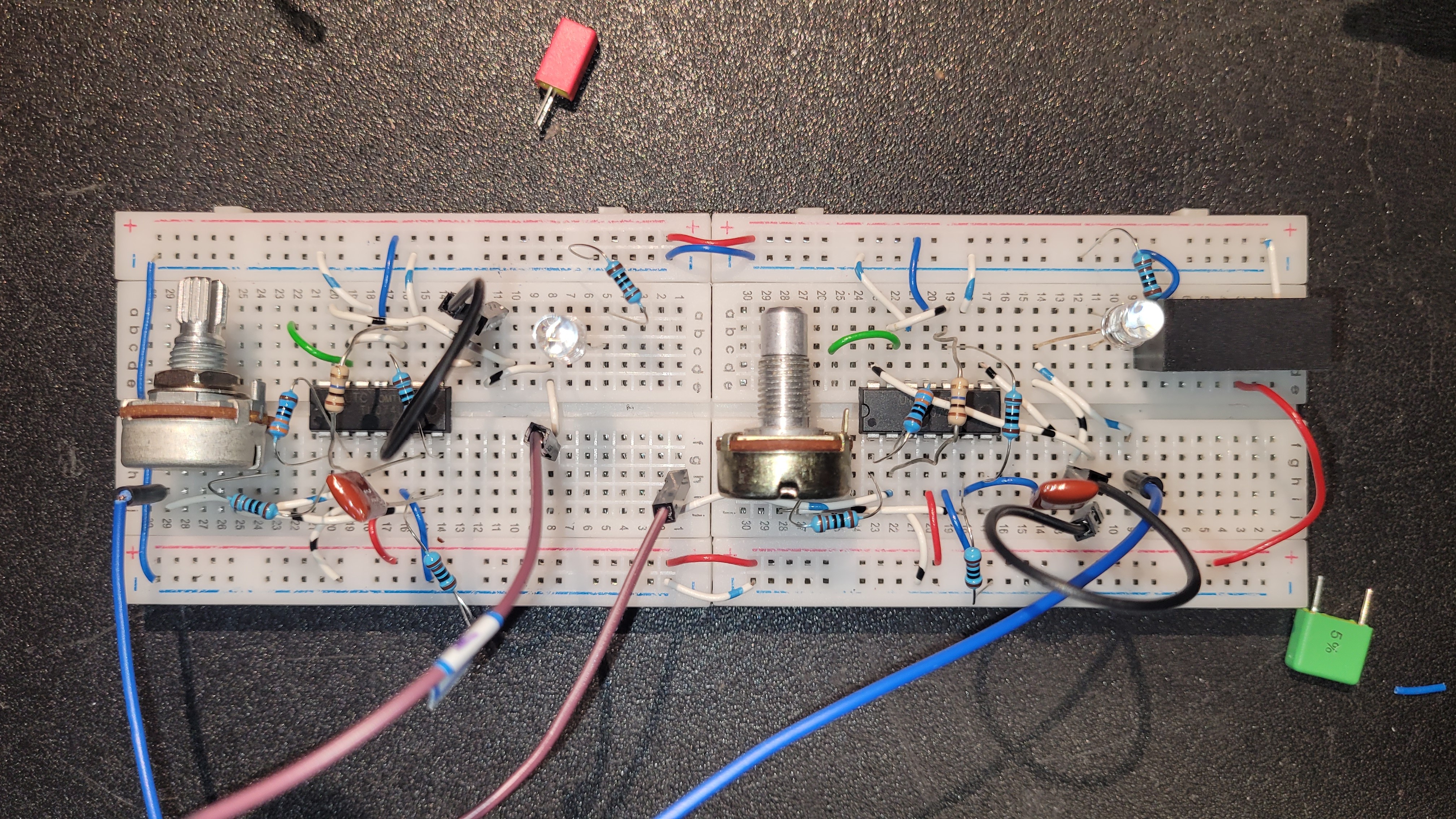
Between 2023 and 2024, as the pandemic began to subside and a new daily life emerged, an exciting project opportunity opened up for me: the Speculative Sound Synthesis research. My friend Luc was kind enough to include me in a major project proposal. While the funding results were originally expected during the height of COVID-19, the project—like so many other things at the time—came to a halt. I had even forgotten that my name was on the proposal.
Fortunately, the project eventually received funding. It was originally planned as a three-year endeavor, but unfortunately, Luc and I had to step away after just two years. I prefer not to discuss the reasons, and at this point, they are no longer important. What matters is the lasting impact those two years had on me.
It has been a long time since I engaged in formal research. I completed my Master’s at Sonology in 2008 and another in Amsterdam in 2011. While I have released many works and conducted smaller studies over the past decade, this project allowed me to realize several things about my practice.
First, through years of composition, I have accumulated much more to say and more things I want to explore. Second, I noticed that my creative process had begun to take on certain patterns—one could say my artistic voice has become clearer. Third, I started questioning very small, fundamental things. These are often closer to philosophical inquiries; I began to harbor basic yet profound questions about the sounds I handle and the technologies I use to create them.
To elaborate, we primarily create or transform sound using computers, which means following digital signal processing (DSP) methods. I understand how signals are processed through my studies in DSP. However, ultimately, behind those technical calculations lies a specific way of handling time—and the same applies to analog methods. I realized I had never seriously considered what fundamental difference these two approaches bring to us as electronic music composers.
I discovered that the worlds of analog and digital, so close yet so far, have always been with me in an unfamiliar way. It was a moment of sudden clarity: I needed to return to the basics. I wanted to understand signals more deeply. And so, the project began.
I started by focusing on how time is processed from analog to digital. Following my characteristic “tinkering” approach, I allowed myself to cross over into whatever areas piqued my interest, resulting in several fascinating experiments.
Moving forward, I intend to collect and share these experiments here—many of which were created back then but never published. These are not quite tutorials, nor are they clearly defined artistic outcomes. It is better to call them “experimental fragments.” By releasing them here, I will document my thought processes and questions, and perhaps I might find answers to one or two of them. Perhaps this writing is simply a means for me to maintain a proper record.
There may be moments where a post ends abruptly without a clear conclusion, but I want to steadily list these past experiments as a series while continuing to pursue new ones. As mentioned, the research was interrupted after two years, and I moved on to other projects. It feels as though I only opened the door to let some air in without progressing further. Now, I want to return to that research and continue it on my own (with occasional conversations with Luc).
If someone happens to find and read this, that would be wonderful. But even if not, I am content. I am simply grateful to finally begin this record.
2023년에서 2024년, 코로나가 잦아들며 새로운 일상이 시작되던 순간, 나에게 흥미진진한 프로젝트 기회가 열렸다. Speculative Sound Synthesis 연구였다. 친구 Luc가 고맙게도 나를 큰 프로젝트 기획안에 포함시켜 준 것이다. 원래 코로나 시국에 펀딩 결과가 나왔어야 했지만, 당시 많은 것들이 멈춰 있던 것처럼 이 프로젝트도 그랬다. 나는 내 이름이 올랐다는 것조차 잊고 지냈다.
다행히 프로젝트가 펀딩을 받게 되었다. 원래 3년간 진행 예정이었지만, 안타깝게도 2년 만에 Luc와 나는 프로젝트를 그만두어야 했다. 이유는 말하고 싶지 않다. 지금은 그 이유도 중요하지 않다. 중요한 것은 그 2년이 나에게 가져다준 여파다.
소놀로지 석사를 졸업한 게 2008년, 암스테르담에서 석사를 끝낸 게 2011년이다. 약 10년 넘게 나는 많은 작품을 발표했고 연구도 조금씩 했지만, 형식을 갖춘 연구를 한 지는 오래되었다. 그 프로젝트가 진행되는 동안 많은 것을 느꼈다.
첫째, 그동안 작품 작업을 하며 경험이 쌓였고, 할 말도 많아졌으며, 하고 싶은 것도 함께 늘어났다는 것. 둘째, 내 작품의 진행 방식이 어떤 패턴을 띠게 되었다는 것. 다시 말하면 내 작품의 색깔이 선명해지기 시작했다고 할까? 셋째, 아주 사소한 것들에 의문을 품기 시작했다는 것. 이런 것들은 주로 철학적 질문에 가깝다. 나는 내가 다루는 소리와 소리를 만드는 기술에 대한 기초적이고 근본적인 질문을 갖게 되었다.
다시 말하자면, 우리는 주로 컴퓨터로 소리를 만들거나 변형한다. 그렇다면 디지털 신호 처리 방식을 따라야 한다. DSP를 공부해서 신호가 처리되는 방식은 잘 안다. 하지만 궁극적으로 그 기술의 계산 이면에는 시간을 처리하는 방식이 있고, 아날로그 방식도 마찬가지다. 그렇다면 그 두 방식이 우리에게—전자음악을 작곡하는 우리에게—궁극적으로 어떤 차이를 가져온 것일까? 나는 그것에 대해 한 번도 진지하게 생각해 본 적이 없다는 것을 깨달았다.
들여다본 아날로그와 디지털이란 세계는 나에게 너무나 가깝지만 동시에 너무나 먼, 낯선 모습으로 나와 항상 함께 있었다는 사실을 발견했다. 근본으로 돌아가야겠다는 생각이 번쩍 드는 순간이었다. 나는 신호에 대해 더 깊이 알고 싶었다. 그렇게 프로젝트를 시작했다.
나는 아날로그 방식에서 디지털로 시간이 처리되는 방식을 중점으로 시작하되, 나의 전형적인 ‘자유로운 여행’ 방식으로 현재 지점에서 자유롭게 가고 싶은 곳으로 넘나들려 했고, 그 결과 여러 재미있는 실험이 있었다.
앞으로 그때 만들어 놓고 어디에도 발표하지 않았던 여러 실험을 모아 이곳에 하나씩 적어 보려 한다. 이것은 튜토리얼도 아니고, 예술적 결과물이라 하기에도 모호한 부분이 있다. 그냥 나의 실험 조각들이라 하는 게 좋겠다. 하지만 이곳에 풀어놓으며 내가 생각하는 방식이나 질문들이 함께 적힐 것이고, 그중 한두 가지라도 답을 하게 되지 않을까? 어쩌면 내가 기록을 잘 남기기 위한 수단으로 이런 글쓰기를 하는지도 모르겠다.
그래서 어떤 때는 중구난방 결론도 없이 끝나버리는 순간이 있을 수도 있지만, 꾸준히 시리즈로 지난 실험들을 나열해 놓고, 또 그러면서 새로운 실험들을 해 나가고 싶다. 아까 말했듯 실험이 2년 후 중단되고 나는 다른 연구를 하게 되었다. 마치 문만 열어 환기만 시켜 놓고 더 진전되지 않았던 연구로 다시 돌아와, 나 홀로(가끔 Luc와 대화하며) 이 연구를 지속하고 싶다.
누군가 와서 보게 된다면 너무 좋겠지만, 그렇지 않더라도 나는 즐겁다. 마침내 기록을 시작하게 되어 감사하다.
As the year comes to an end, I find myself more drawn to noticing how I have been thinking and working.
This year was marked by a sustained engagement with practice rather than resolution. I spent much of my time building, testing, listening, and reworking—often without a clear sense of where things would land. Instead of aiming for finished forms, I stayed with processes that were unstable, provisional, and sometimes uncomfortable.
Much of this year’s work was shaped by my one-year lectorate research at the Conservatoire, Tinkering as a Speculative Tool for Music Composition.
This research emerged out of a sense of urgency. My originally three-year project, Speculative Sound Synthesis, unexpectedly ended after two years in 2024, just as the work was becoming more focused. I was therefore looking for a way to continue, not by restarting, but by carrying forward the questions and fascinations that had accumulated toward the end of that period.
The lectorate research offered such a continuation, albeit in a different form. It was more directed and contextualized, yet still grounded in hands-on experimentation, uncertainty, and speculative practice. Above all, I was finally able to write down some of my thoughts, what I have practiced, and what I wanted to share.
As part of this research, I developed Machi-nory, a work that functions less as a fixed composition and more as an ongoing on-stage experimentation (tinkering!). Alongside this, I led two workshops that extended the research into pedagogical and collective contexts. The outcomes of this period—both artistic and reflective—will be published in written form and presented publicly in January–February 2026.
Another significant strand of this year was my return to the analog studio. Thanks to Kees Tazelaar, who allowed me to attend his classes after 19 years, I was able to re-learn analog studio techniques and, more importantly, to encounter them from a completely fresh perspective.
Working in this environment reshaped how I think about technology—not as something to be optimized or streamlined, but as a space for attention, constraint, and material decision-making. And what it truly means to deal with the process of making relations between the technological blocks.
I became particularly fascinated by VOSIM, which led to the composition of two new eight-channel works, Vosim Variations I & II. These pieces will be premiered next year at the Sonic Acts
Festival and are partly commissioned by the festival.
These works draw on early spatial techniques developed before contemporary panning technologies, integrating phase relationships and distribution strategies rather than conventional spatial movement. They are also the first pieces I have composed entirely without a computer—created in the analog studio with minimal editing—which marked a meaningful shift in my compositional process.
Another memorable moment this year was a field-recording-based project Buoyants
developed with Ludmila, Mike, and Rob. It was my first field recording practice, combined with experiments in vertical panning and spatial listening. Working with long-time friends for the first time gave this project a particular resonance, both personally and artistically.
This project will return again in April, in Veere, continuing its underwater exploration.
Across different projects, a recurring concern kept returning: how sound, signal, material, and action relate before they are organized into familiar structures. Much of my work unfolded around circuits, feedback systems, spatial sound, and performative situations where control was partial and outcomes remained contingent. What interested me was not mastery, but what emerges when systems are allowed to behave on their own terms.
Over the course of the year, something shifted in how I understand my practice. I became more attentive to states that precede clarity—to moments before sound becomes music, before signal becomes information, before an action becomes intention. Rather than trying to stabilize these moments too quickly, I began to see value in staying with them, letting them remain unresolved. Listening, oh, and listening!
This has also influenced how I think about research and writing. I am increasingly interested in writing not as a means of explanation, but as a way of thinking: of holding questions open, of resisting premature conclusions, and of making space for uncertainty as an active condition rather than a lack.
Looking ahead, I am not so much planning a new direction as continuing a trajectory. The coming period will focus on deepening questions around signals, material interactions, and the conditions under which things become perceptible or operative. I want to keep working at the threshold, where things are sensed but not yet named, where form has not fully settled.
This year did not bring closure, but it did bring a clearer sense of where I am standing. And for now, that feels enough.
Happy New Year to you all.
한 해의 끝에 서서, 올해는 내가 어떤 방식으로 생각하고 작업해 왔는지를 돌아보게 된다.
올해는 실천을 지속하는 한 해였다. 나는 많은 시간을 들여, 실험하고, 듣고, 다시 고치는 데에 보냈다. 그 과정이 어디로 향할지 명확하지 않은 상태에서 작업하는 경우가 대부분이었다. 완성된 형태를 목표로 하기보다는, 불안정하고 잠정적이며 때로는 불편한 과정 그 자체에 머물렀다.
올해의 작업 대부분은 콘서바토리에서 진행한 1년간의 Lectorate 연구 『Tinkering as a Speculative Tool for Music Composition』에 의해 형성되었다.
이 연구는 일종의 긴급함에서 출발했다. 원래 3년으로 계획되었던 연구 프로젝트 Speculative Sound Synthesis가 작업이 점점 더 집중되기 시작하던 시점인 2024년에 예기치 않게 2년 만에 종료되었기 때문이다. 그래서 나는 처음부터 다시 시작하기보다는, 그 시기 말미에 축적되었던 질문과 내가 심취했던 부분들을 이어갈 수 있는 방법을 찾고 있었다.
이 Lectorate 연구는 다른 형식이긴 했지만, 그러한 연속성을 가능하게 해주었다. 보다 방향성이 있고 맥락화된 형태였지만, 여전히 손으로 직접 실험하고 불확실성과 사변적 실천에 기반을 둔 작업이었다. 무엇보다도, 그동안 내가 실천해 온 것들과 생각해 온 것들, 그리고 공유하고 싶었던 것들을 마침내 글로 남길 수 있었다.
이 연구의 일환으로 Machi-nory를 작업했다. 이 작품은 고정된 작곡 작품이라기보다는 무대 위에서 계속해서 진행되는 실험, 말 그대로의 tinkering이다. 이와 함께 두 차례의 워크숍을 진행하며 연구를 교육적·집단적 맥락으로 확장했다. 이 시기의 결과물들은 예술적·사유적 기록 모두를 포함해 2026년 1–2월에 글과 발표의 형태로 공개될 예정이다.
올해의 또 다른 중요한 흐름은 아날로그 스튜디오로의 복귀였다. 19년 만에 다시 수업에 참여할 수 있도록 허락해준 Kees Tazelaar 덕분에, 나는 아날로그 스튜디오 기법을 다시 배우는 동시에 그것을 완전히 새로운 시각에서 마주할 수 있었다.
이 환경에서의 작업은 내가 기술을 바라보는 방식을 바꾸어 놓았다. 기술을 효율화하거나 매끄럽게 만드는 대상으로 보기보다는, 주의(attention), 제약(constraint), 물질적 결정이 이루어지는 공간으로 인식하게 되었다. 그리고 기술적 블록들 사이의 관계를 만들어가는 과정이 무엇을 의미하는지도 다시 생각하게 되었다.
특히 VOSIM에 깊이 매료되었고, 그 결과 8채널 작품 Vosim Variations I & II를 작곡했다. 이 작품들은 내년에 Sonic Acts
페스티벌에서 초연될 예정이며, 부분적으로 페스티벌의 커미션을 받았다.
이 작품들은 현대적인 패닝 기술이 등장하기 이전에 발전된 초기 공간화 기법들을 참고하여, 전통적인 공간 이동 대신 위상 관계와 분배 전략을 통합하고 있다. 또한 이 작품들은 내가 컴퓨터 없이, 아날로그 스튜디오에서 최소한의 편집만으로 완성한 첫 번째 작업들이기도 하다. 이는 나의 작곡 과정에서 의미 있는 전환점이 되었다.
올해 또 하나 인상 깊었던 순간은 Ludmila, Mike, 그리고 Rob과 함께 진행한 필드 레코딩 기반 프로젝트 Buoyants
였다. 나에게는 처음하는 필드 레코딩 이었고, 수직적 패닝과 공간적 듣기에 대한 실험이 함께 이루어진 작업이기도 했다. 오랜 시간 알아온 친구들과 처음으로 협업할 수 있었던 점은, 개인적으로도 예술적으로도 이 프로젝트에 특별한 울림을 더해주었다.
이 프로젝트는 내년 4월 Veere에 다시 돌아올 예정이다.
여러 프로젝트를 거치며 반복해서 돌아온 관심사는 소리, 신호, 물질, 행위가 익숙한 구조로 조직되기 이전에 어떻게 관계 맺는가 하는 질문이었다. 나의 작업은 회로, 피드백 시스템, 공간 음향, 퍼포먼스 상황을 중심으로 전개되었고, 그 안에서 제어는 부분적이며 결과는 늘 우발적으로 남아 있었다. 내가 관심을 가진 것은 숙련이나 통제가 아니라, 시스템이 스스로의 조건에 따라 작동할 때 무엇이 나타나는가였다.
한 해를 지나오며, 나의 작업을 이해하는 방식에도 변화가 생겼다. 나는 명료함에 앞서는 상태들, 소리가 음악이 되기 전, 신호가 정보가 되기 전, 행위가 의도가 되기 전의 순간들에 더 주의를 기울이게 되었다. 이 순간들을 너무 빨리 안정시키기보다는, 미결 상태로 두는 것의 가치를 배우기 시작했다. 듣기, 그리고 또 듣기.
이러한 변화는 연구와 글쓰기에 대한 생각에도 영향을 주었다. 나는 점점 글쓰기를 설명의 수단이라기보다는 사유의 방식으로 생각하게 되었다. 질문을 열린 채로 두고, 성급한 결론을 거부하며, 불확실함을 결핍이 아니라 능동적인 조건으로 두는 방식으로.
앞으로를 내다보면, 나는 새로운 방향을 계획하고 있다기보다는 이미 이어지고 있는 궤적을 계속 따라가고 있다. 앞으로의 시간은 신호, 물질적 상호작용, 그리고 어떤 조건에서 사물들이 감지되거나 작동하게 되는지를 더 깊이 탐구하는 데에 집중하려 한다. 그리고 나는 계속해서 경계(threshold)에 머물고 싶다. 아직 이름 붙여지지 않았고, 형태가 완전히 굳지 않은 상태에서.
올해는 어떤 마무리를 가져다주지는 않았지만, 내가 어디에 서 있는지는 조금 더 분명하게 해주었다. 지금으로서는, 그것으로 충분하다.
나는 책을 좋아한다. 좀 더 정확히 말하면 ‘독서’를 좋아한다고 하는 편이 맞을지도 모르겠다. 네덜란드에 살다 보니 한국 책을 손에 넣을 방법이 거의 전자책뿐이라 늘 이북으로 읽는다. 사실 읽을 수만 있다면 종이든 화면이든 상관없다. 다만 전자책은 검색이 용이하고, 필요한 구절을 쉽게 복사할 수 있으며, 이북 리더 하나면 수백 권의 책을 들고 다닐 수 있으니 꽤 실용적이다.
물론 실물책이 주는 즐거움도 있다. 책장을 넘기는 촉감, 종이 냄새, 즉석에서 메모를 하거나 포스트잇을 붙이는 행위. 하지만 나는 로맨티스트라기보다는 실용주의자에 가까운지도 모른다. 실물책에 크게 연연하지 않는 걸 보면 그렇다.
독서에서 가장 큰 재미는 책을 고르는 일이다. 이 과정이 중요한 이유는, 이 선택이 앞으로 며칠 동안의 내 독서 시간을 결정하기 때문이다. 좋은 책을 만나면 그 책을 읽는 2–3일간(대략 300페이지 기준) 내 태도조차 책의 영향을 받는다. 우울한 책을 읽으면 나도 조금 우울해지고, 흥미로운 책을 읽으면 독서에 더 몰입하게 된다. 결국 “다음에 어떤 책을 읽을까?”라는 선택은 늘 즐겁지만 힘든 일이다.
나에게 정해진 독서 시간도 있다. 하루 중 반드시 지키는 두 시간은 오전 7시와 저녁 9시 30분이다. 아침에 눈뜨자마자, 그리고 잠자리에 들기 전이다. 아침 독서는 전공과 관련된 공부를 위한 시간이다. 노트를 펼쳐놓고 45분 동안 5–7쪽 정도를 아주 천천히 읽으며, 요약을 남기고 중요한 구문을 옮겨 적는다. 아침을 택한 이유는 이 시간대의 의지가 강하고, 이런 책들은 많은 에너지를 필요로 하기 때문이다. 반대로 저녁에는 정말 읽고 싶은 책을 읽는다.
또 하나, 나는 독서 편력이 없다. 가리지 않고 닥치는 대로 읽는다. 소설, 역사, 과학, SF, 자기계발, 추리, 인문… 장르를 막론하고 다 좋아한다. 그중에서도 특히 좋아하는 장르는 ‘책 에세이’다.
책 에세이를 좋아하는 이유는 세 가지다.
첫째, 실용적인 이유로, 많은 책들을 소개해 주기 때문이다. 저자가 애착을 가진 책이 등장하곤 하는데, 그런 책은 대체로 매력이 크다.
둘째, 작가의 소소한 평가 속에서 책을 대하는 태도를 배우거나 내가 미처 생각하지 못한 시각을 만날 수 있다. 에세이 속 저자와 책이 교감하는 방식을 엿보며, 그것을 나의 방식과 비교하는 즐거움도 있다.
셋째, 독서가 느슨해질 때 책 에세이는 다시 책을 사랑하게 만든다. 책에 대한 열정이 담겨 있기 때문에, 한두 권만 읽어도 몇 달간의 독서 열정을 불러일으킨다. 좋은 책을 읽으면 소개하고 싶어진다. 그 욕구는 단순히 아까워서가 아니라, 책에 대한 대화를 나누고 싶은 마음이다. 독서 에세이는 그 대화의 갈증을 해소해 준다.
Italo Calvino Book Cover
내가 즐겨 읽은 책 몇 권을 소개하자면:
Alberto Manguel – A History of Reading (독서의 역사), A Reader on Reading (책 읽는 사람들): 독서 행위 자체를 깊이 탐구하며 여러 책을 엮어낸 글쓰기 / 독서의 즐거움과 위안에 관한 39편의 글.
Italo Calvino – Why Read the Classics? (왜 고전을 읽는가): 고전을 읽는다는 것의 의미와 즐거움, 필요성을 구체적인 책들을 통해 풀어낸다.
이동진 – 『밤은 책이다』: 따뜻한 어조로 70권이 넘는 책들을 소개. 특히 밤에 읽기 좋은 책들을 모았는데, 사실은 이동진의 글 자체가 좋다.
유시민 – 『청춘의 독서』: 젊은 시절 읽었던 책들을 다시 돌아보며 쓴 글. 정치적 색채 때문에 읽는 내내 불편하기도 했지만, 책에 대한 관점은 여전히 흥미롭다.
Umberto Eco – Confessions of a Young Novelist, On Literature: 자신이 읽고 해석한 책들을 매개로 문학과 독서에 대해 사유한 글 모음.
그런데 문득 이런 생각이 든다. 책을 위한 책이 있다면, 음악을 위한 음악도 있지 않을까? 음악사 속에서 수없이 만들어진 변주곡이나 오마주, 리믹스 같은 것들이 바로 그런 예일 것이다. 이미 존재하는 음악을 다시 불러내고, 그 위에 자기만의 언어를 덧붙여 또 다른 음악을 만든다. 하나의 텍스트를 읽고 다시 글을 쓰듯, 음악은 음악을 다시 읽어내며 새로운 음악으로 태어난다. 그 가운데 가장 에세이적인 음악은 아마도 “원작을 비틀면서도, 결국은 다시 원작으로 돌아가게 만드는 음악”일 것이다. 단순한 차용이 아니라 자기 해석이 깊숙이 배어 있어, 듣는 이로 하여금 “그럼 원래 곡은 어땠을까?” 하고 궁금해지게 만드는 음악. 결국 원작과 새로운 해석 사이를 오가며, 청자를 흔드는 음악이다.
또 한편으로는, ‘듣기’라는 행위 자체를 탐구하는 음악도 있다. 존 케이지의 4’33”은 연주 대신 침묵 속에서 모든 소리를 듣게 함으로써 “음악은 소리가 아니라 듣기다”라는 사실을 드러냈다. 폴린 올리베로스의 Deep Listening은 ‘듣는 법’ 그 자체를 음악으로 삼았다. 이런 작품들을 떠올리면, 음악을 위한 음악이란 단순히 소리를 다시 쓰는 것이 아니라 음악을 어떻게 경험하고 해석할 것인가에 대한 질문이기도 하다.
독서를 하든, 음악을 듣고 만들든, 우리는 결국 우리 과거의 경험 위에서 움직인다. 에세이나 변주곡은 그 경험을 아주 구체적이고 창의적인 방식으로 드러내며, 작가와 연결되는 행위일 것이다. 어쩌면 내가 독서 에세이를 사랑하는 이유도 여기에 있는지 모른다. 흥미롭게도, 나는 변주곡이나 리믹스를 그만큼 사랑하지는 않는다. 그러나 그 차이가 또 재미있다.
I love books—or more precisely, I love reading. Living in the Netherlands, e-books are practically my only way to get Korean books. As long as I can read, I don’t mind paper or screen. E-books are searchable, easy to copy from, and one reader lets me carry hundreds of volumes. They are very practical.
Of course, printed books have their pleasures: the feel of turning pages, the smell of paper, scribbling notes and sticking Post-its. But I may be more of a pragmatist than a romantic; I’m not especially attached to print.
Choosing what to read is the biggest joy. It matters because that choice sets the tone of the next few days of reading. When a book is good, during those two or three days (say, around 300 pages) even my mood is colored by it. A gloomy book makes me a little gloomy; an exciting one pulls me deeper into reading. So the question “what’s next?” is always delightful, and hard.
I also keep two fixed reading hours: 7:00 a.m. and about 9:30 p.m., right after waking and just before bed. Morning is for study in my field. I open a notebook and read very slowly for about 45 minutes, five to seven pages, summarizing and copying key phrases. Mornings work because my willpower is stronger then and these books demand energy (and a will power!). Evenings are for books I simply want to read.
I’m not picky about genres; I read whatever comes. Novels, history, science, SF, self-help, mystery, humanities… I enjoy them all. Among them, I’m especially fond of books about books—reading essays.
Why reading those essays? Three reasons.
First, they introduce many books practically useful. The titles writers truly cherish tend to be engaging in their own right.
Second, through the author’s small evaluations I learn an attitude toward books, and I meet perspectives I wouldn’t have had on my own. It’s fun to compare how the essayist communes with a book to how I do.
Third, when my reading slackens, such essays make me love books again. Because they carry passion for reading, even one or two can ignite a few months of momentum. After a good book I want to share it—not just because it feels wasteful to keep it to myself, but because I want a conversation. Reading essays scratch that itch.
Italo Calvino Book Cover
A few I’ve enjoyed:
Alberto Manguel – A History of Reading, A Reader on Reading: Essays that probe the act of reading itself and weave many books together / 39 pieces on the pleasure and solace of reading.
Italo Calvino – Why Read the Classics?: What it means to read the classics—its joy and necessity—told through specific works.
Lee Dong-jin – Night Is for Books: Warm, inviting prose introducing over seventy titles—especially good for night reading. Honestly, I just love his writing.
Yoo Si-min – Reading in Youth: Revisiting books from his younger years. The political tone sometimes made me uneasy, yet his views on books remain compelling.
Umberto Eco – Confessions of a Young Novelist, On Literature: Reflections on literature and reading through works he read and interpreted.
Then a thought: if there are books about books, is there music for music? Variations, homages, remixes; music has long rewritten music. You call an older piece back, lay your own language over it, and another piece is born. As with a text spawning another text, music rereads music and becomes new. The most essay-like music might be the kind that twists the original yet ultimately sends you back to it. Not mere borrowing, but interpretation soaked deep enough to make you ask, “What was the original really like?”—so that you shuttle between source and reading, stirred as a listener.
There is also music that explores the act of listening itself. John Cage’s 4’33” replaces performance with attention, showing that music is not sound but listening. Pauline Oliveros’s Deep Listening turns the very practice of listening into music. Such works suggest that “music for music” isn’t simply rewriting sounds but asking how we experience and interpret music.
Whether we read, or listen and compose, we ultimately move upon our past experiences. An essay or a set of variations makes that experience concrete and creative, tying it back to the author. Perhaps that’s why I love reading essays. Curiously, I don’t love variations or remixes to the same degree, but that difference is interesting in itself.