I know that the year 2018 has already gone long ago… Still, better writing about some memorable musical activities from the year rather than not! And eventually it will make me to go further. It has been indeed quite a busy and productive year. I worked hard, and made lots of new music and performances, so here I’d like to share some of them.
1. ‘Identifying’ in sonADA, Aberdeen/UK //Feb
It’s not the first time to visit in Aberdeen. 4 years ago, Mei Yi (Percussionist) and I went there, performed several pieces of mine, invited by sonADA festival, which my dear friend and admired composer Suk-Jun Kim is organizing. This time I went alone, performed ‘Strings,’ ‘Singing Bowl,’ and ‘Two Bamboos,’ the most recent live sets. Although it was quite demanding to perform several sets at once, but I had a pleasant time! When you are performing at one festival second time, then you become a friend with it.
2. Rewire Festival 2018 //Apr
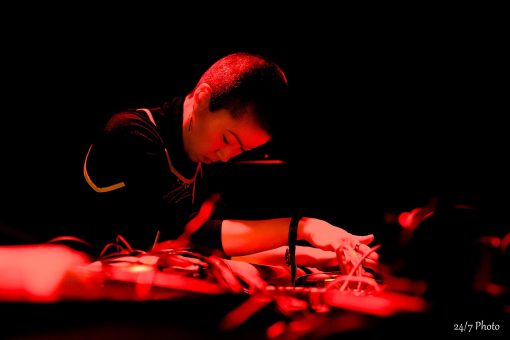
It’s always great when performing at the local music festival. Since I’ve been in Den Haag, I have never had a chance to perform at Rewire, one of the most popular music festivals in Europe, and this time I got the honer and was very thankful about it. I performed a newly developed set with Bamboo and Gong at Koorenhouse hall, the very heart of the center. It was great, especially you know that most of your local friends are in front of you!
3. ‘CHI’ vol.2 //Jun
Finally after so many years, the CHI volume 2 happened at Studio Loos, the dearest place. CHI Vol.1 happened in 2013, performing with Mei Yi and Sonolab, with a guest performer (Henry Vega at Vol1). This time, I composed two new pieces, ‘Rolling stones’ and ‘Drinking alone under the moon’ and performed a piece from Vol.1 ‘BamBoos,’ and another premiere of a piece for a Bass Drum, performed by Sonolab Duo. The guest performer was Yota Morimoto, another dear friend from my first year in NL. After very nervous stressing time passed, it was very relieving to perform all the pieces. I hope this series could continue.
4. TodaysArt Festival – Azimuth-x //Sep
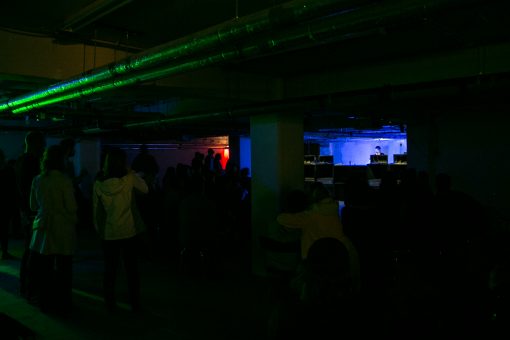
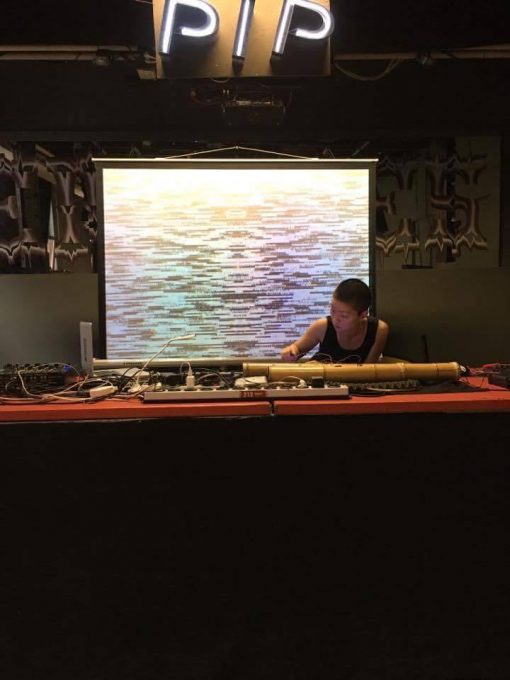
Normally Azimuth invites composers/performers to perform with their specific multichannel system, but this time was MONO! It was special as the concert was part of the TodaysArt Festival in Den Haag! I performed a newly developed set ‘Cross Wired’ :the main idea was to modulate a CV voltage with an analog amplifier with feedback signal. This chaotic signal was enough to manipulate with the signal processing. But still I needed some more materials to fill 30 minutes of performance. So I added some voice and processing at the intro, explaining what I am actually doing physically, but the audience can’t understand what I am talking about in time, as the sound is turning into a very noisy sound. It was really fun.
5. UTOPA Organ – Conlon & Orgelpark //Nov
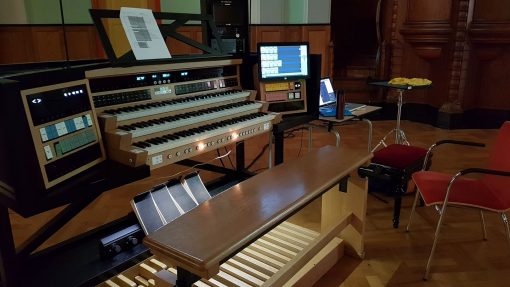
UTOPA Baroque organ is a special organ that one can control its keys/stops/registers via MIDI or OSC. This gigantic machine(?) was quite challenging as it can do a number of different things that normal Baroque organ can’t do, such as air control, making continuous pulses/staccato, controlling each register individually, etc. I thought it’d be a good idea to make the concept and the piece simple, so that I focused on the characteristics of the organ as a ‘Machine.’ Accordingly the title of the piece is ‘Machine Breathing .’
The project is commissioned by Orgelpark. We, the Conlon foundation, were participacing the project as a composer and also as an assistant for other composers.
6. Pentacle 15.3 – NEXT Festival, Bratislava //Nov
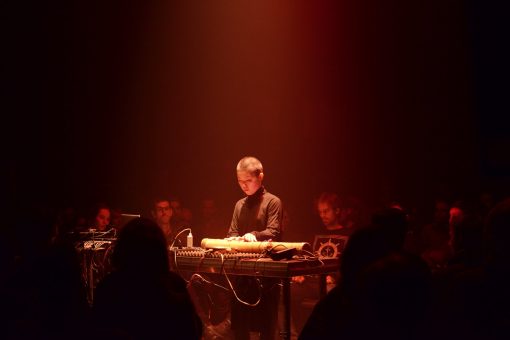
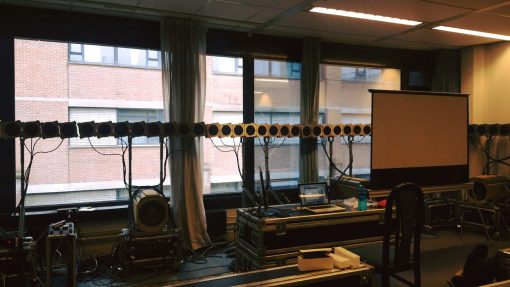
It was an exciting opportunity to perform in Bratislava, as it was the first time in Slovakia, and I could meet some old Sonology friends who are very active there. Above all, the commission is to perform a live electronic muisic for 15.3 channel Pentacle system! Commissioned by NEXT Festival and SonicActs Amsterdam, I could perform with it. Pentacle is developed in STEIM by Fedde ten Berge and Jesse Meijer. The spatialization works with audio signal using FFT bins. All the composers did a few days of residency in STEIM and the NEXT festival was the premiere. I renewed the live set with two Bamboos and a gong. I had a wonderful time there.
7. PRISM#1 – Live music for Live film projection by Lichun Tseng //Dec
decomposed landscapes @ sound//vision IFFR with Ji Youn Kang (excerpt) from lichun tseng on Vimeo.
Ever since I worked with Filmwerkplaats Rotterdam, I missed working with them. And dear Lichun Tseng, one of the filmmakers there offered me this chance to make a live sound for her live film projections with 16mm projectors. This time at Nantes, France, we performed 40 minutes of live set. We practiced only 2 days, due to the complexity of booking the location and her heavy loaded setup, so it made us nervous, but we made it well. We drove 9 hours to Nantes, was quite an adventure, but all were memorable.
I am again looking forward to this year’s activities! Hopefully another productive year!
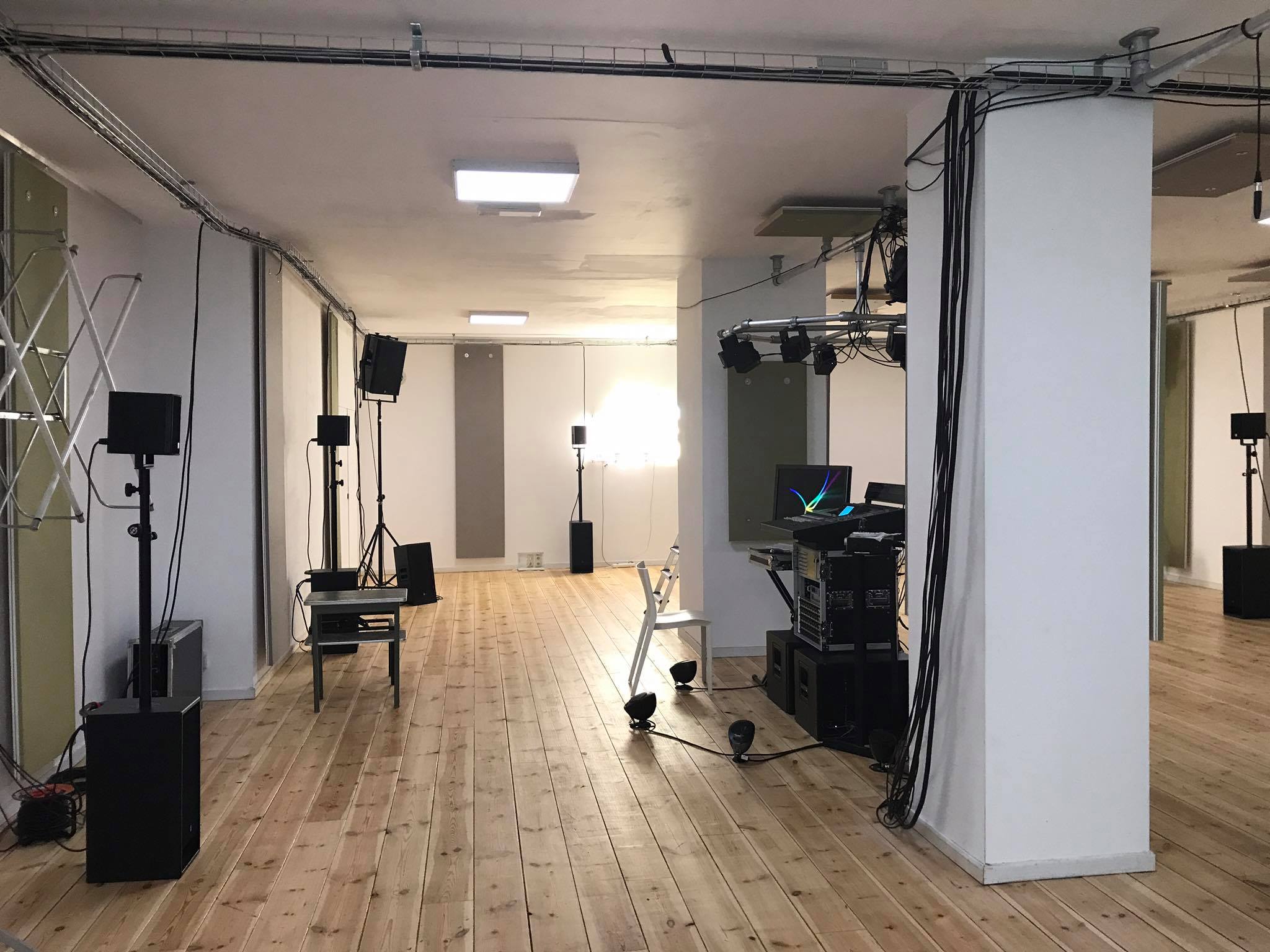
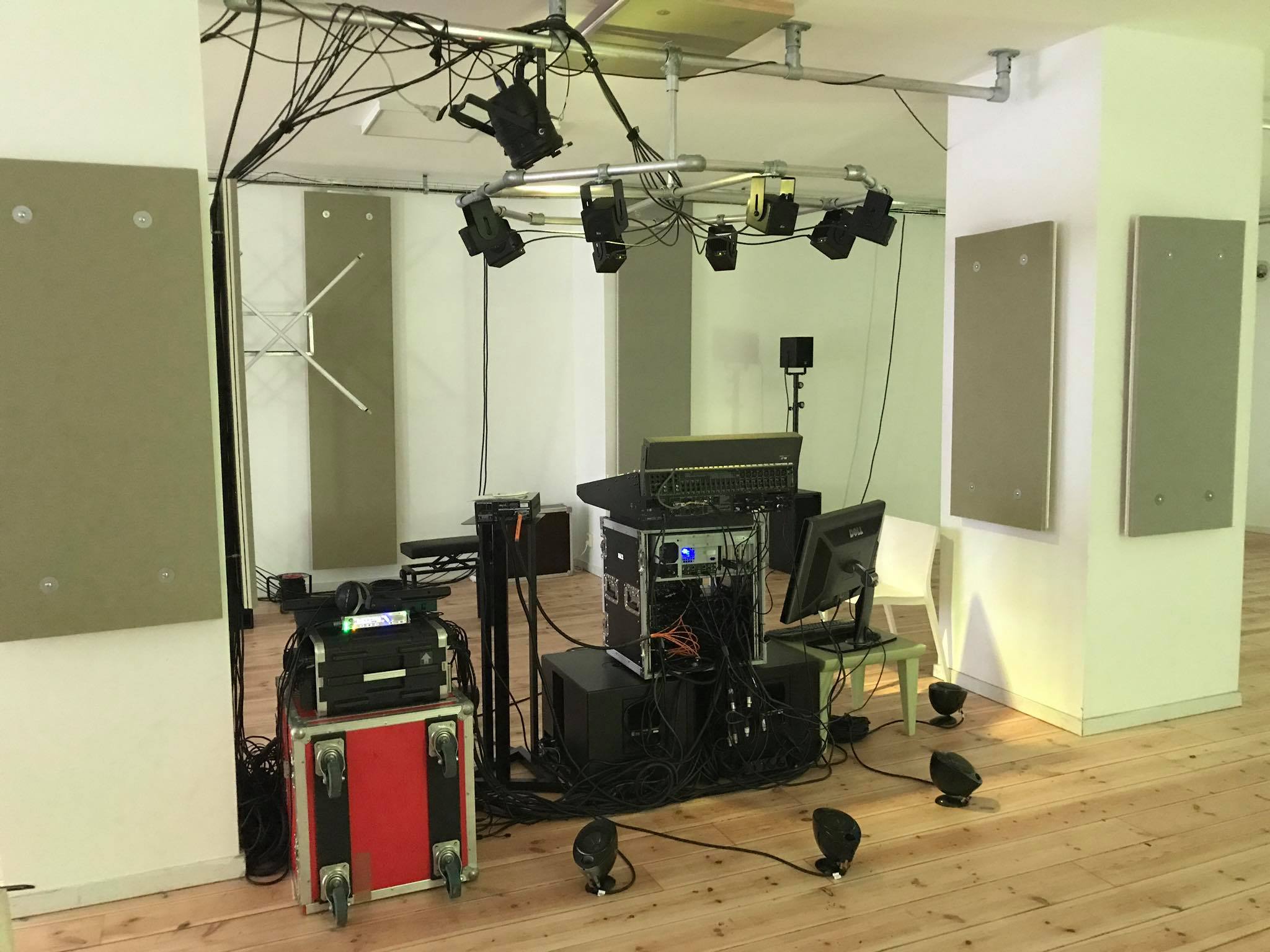
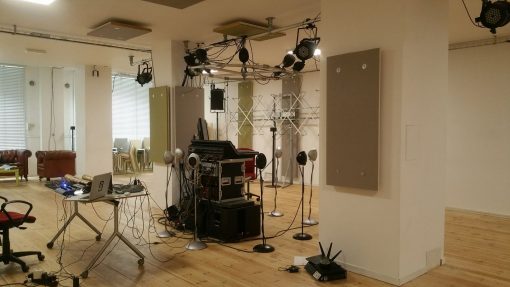 ‘Azimuth’ is a foundation that their multichannel system offers composers/artists to create spatial music/arts with the system. Azimuth #3 was my first experience with it. The piece I wrote is ‘Punky-Pulse-Pool’ for 32 channels.